We are at an all-time low of emergency blood, and donating can be beneficial for patients in need and you as the donor.
November 19, 2025
By Marcus Mares, Exercise Physiology Undergraduate, Northern Arizona University
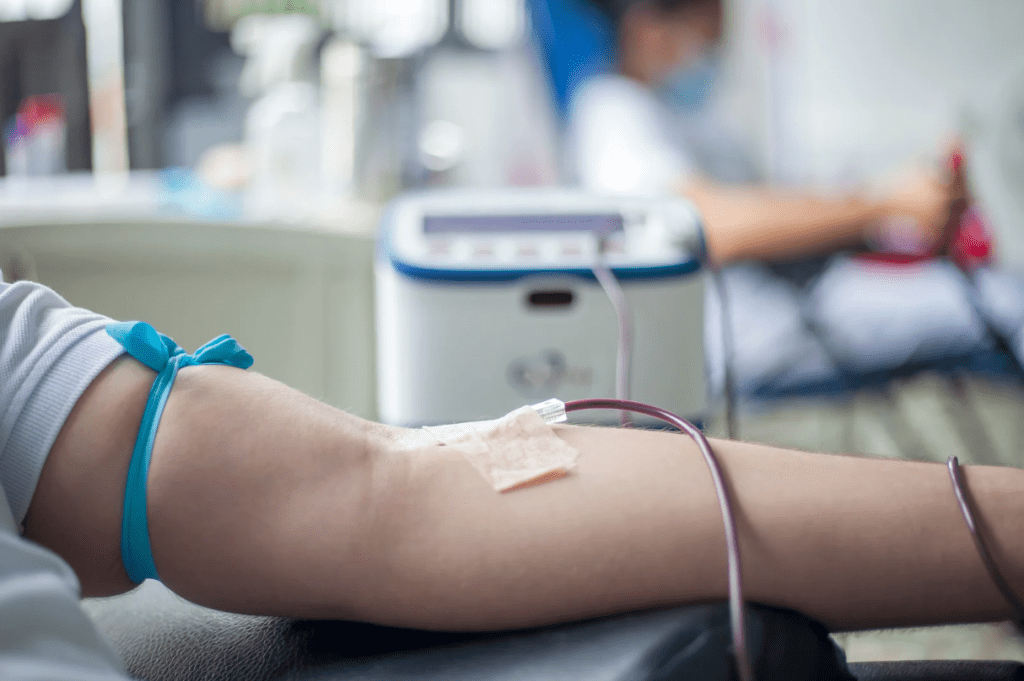
Blood is one of the most precious, life-saving resources available to hospitals and medical professionals today. It is consistently needed for surgeries and emergency situations, but we cannot simply manufacture it in bulk. Our only access to lifesaving blood is by brave volunteers donate it.
Unfortunately, in the past 20 years, fewer and fewer people are willing to volunteer for blood drives, leaving our supply of blood at an all-time low, and it has only gotten worse since Covid. As of January 7, 2024, the American Red Cross has declared an emergency blood shortage, stating the number of donors has dropped by 40%.
Without a viable group of willing donors, a steady supply of emergency blood cannot be maintained, which is viable for emergency transfusions and treating trauma patients. In this article, we will look deeper into what blood is used for, along with some information from nurse practitioners on why people should donate.
A closer look at blood
There are three main vital components in blood: red blood cells, platelets, and plasma. The red blood cells make up roughly 45% of our blood and use a protein known as hemoglobin to bind to oxygen and carry it to different cells in the body.
Platelets make up 1% of our blood alongside white blood cells and are small fragments that are formed in the bone marrow, which clump together and form clots when a blood vessel is damaged.
Plasma is the clear liquid that makes up roughly 55% of our blood and contains antibodies and proteins known as fibrinogens that are vital for fighting off infections.
What is it used for?
In the medical field, blood is used to treat a variety of conditions such as trauma, sickle cell anemia, and organ transplants. But just how common are these conditions?
Ashley Mattix, a Nurse Practitioner for 33 years with Flagstaff Medical Center, stated that in her 20 years working as an ICU nurse, “..at least 2 trauma patients require blood transfusions per day”. She also stated “…bleeding complications after open-heart surgeries or cardiovascular emergencies were extremely common and all of them required emergency blood for the patient”.
Aside from its use in the ICU, emergency blood is also useful for treating immunodeficiencies. Individuals with these disorders cannot properly fight off infections because of their inability to produce antibodies. Donated plasma can help boost their immune system by providing them with the antibodies they need to properly fight off infections.
This is commonly done through Immunoglobulin Replacement Therapy, a procedure where plasma is given intravenously to elevate the immunoglobulins in the immune system for protection against disease.
Why we should donate
According to the American Red Cross, every 2 seconds, someone in our country needs blood. We are already at a national shortage of emergency blood nationwide, and without donors, we may not have the resources we need to help people in need in the future. We can’t wait around and rely on science to come up with an artificial solution. Racheal Rhodes, a phlebotomist with Vitalant for almost two years, states, “You never know when tragedy strikes and you could also be on the receiving end of a donation someday.”
It is also important that we have a variety of blood types available for treatment. Certain patients may require specific blood types for transfusions, especially ones being treated for sickle cell. If a patient is not given a specific rare blood type during a transfusion, their immune system will attack the donated blood cells, which could lead to further complications or even death.
Besides the lifesaving effects of donating blood, it can also be very beneficial for you as the donor. When you donate, you are giving about 500 mL of blood, which is almost 10% of your blood. This stimulates the body to produce more blood, which has a cleansing effect on the body and can help improve overall blood flow. During the procedure, a small physical is also conducted to check for iron and hemoglobin levels in the bloodstream. Depending on the results, this can help diagnose any underlying health conditions like iron deficiency or anemia before it gets worse.
A breakdown of the procedure
Blood donations are very simple and easy procedures that only take thirty minutes or less. It is not much different from getting lab work done, and it’s not as painful as you might think. If you are interested in donating blood, you can schedule an appointment either through Vitalant or the American Red Cross and use their websites to search for any blood drives near you.
Anyone age 17 and up who weighs more than 100lbs is eligible to donate blood. Leading up to your appointment, it is important to drink plenty of water and eat foods rich in iron, like leafy greens, lean meats, and fruits.
On the day of your appointment, you should continue to stay hydrated, and eating salty foods can also help you have a better experience. When you arrive, your phlebotomist will check your vitals along with your iron and hemoglobin levels by pricking the tip of your finger and taking a very small sample. It feels like nothing more than a slight pinch and will only take a few seconds.
If your vitals are looking good, you will be directed to an adjustable chair where they will wipe your arm down and palpate for veins. You may use either your left or right arm, whichever you are most comfortable with. Your phlebotomist will then warn you to look away if you need and you will feel another slight pinch that lasts for a few seconds. After the needle is inserted, you’ll sit for another 10-15 minutes while occasionally squeezing a stress ball or any small object to help your blood flow more easily. During your donation, relax and wiggle your feet to keep blood flowing to your brain. The entire procedure is 100% safe, and remember that you are doing a very selfless service to your community.
After your donation is finished, it is completely normal to feel some dizziness or fatigue. Your practitioners will likely keep you for another 10 minutes to avoid any other side effects. You will also be provided with water, electrolytes, and snacks to keep you fed and hydrated. For the next 24 hours, remember to eat well and avoid any strenuous lifting or activity so your body can properly recover.
Conclusions
As stated, donating blood is an important service to the community, and it has many uses and benefits for you and the people who receive it. If you are a healthy individual, please consider scheduling an appointment. You never know when you or someone you know could be in need, and it feels great to know you’re saving a life out there.
References
Red Cross (2024). Red Cross declares emergency blood shortage, calls for donations during National Blood Donor Month, Page 1, https://www.redcross.org/about-us/news-and-events/press-release/2024/red-cross-declares-emergency-blood-shortage-calls-for-donations-during-national-blood-donor-month.html
 Athletes Corner
Leave a comment